Queue Management System in Saudi Arabia vs Lahore
Choosing a queue management system in Saudi Arabia or in Lahore involves many of the same technologies, yet the two markets pull the decision in different directions. Regulations, language mix, power reliability, and customer expectations all shift depending on where the branch sits. This article compares both markets side by side so operators running services across the Gulf and Pakistan can specify one platform that works well in both places, or tailor each deployment to local conditions in 2026.
If you manage retail counters, clinics, telecom customer-care centres, or government service desks in either region, the practical differences below will help you avoid buying the wrong configuration.
Why Compare These Two Markets At All
Many businesses expand from Pakistan into the Gulf, or run parallel operations because of shared ownership and staff. A telecom reseller, for example, might support customers in Riyadh and Lahore from the same head office. When that happens, a fragmented approach to visitor flow creates duplicated training, mismatched reporting, and inconsistent customer experience.
Standardising on a well-chosen platform, while allowing local tweaks, keeps reporting comparable across borders. That is why picking the right queue management system matters as a group decision, not a per-branch afterthought.
Regulatory and Language Differences
The two environments diverge most clearly around compliance and communication.
Saudi Arabia
Public and financial services face rising service-quality expectations linked to Vision 2030. Bilingual Arabic and English calling is essential, and government offices increasingly want audit-ready reporting on wait and service times. Data handling should respect Saudi data-protection guidance.
Lahore
Urdu and English dominate, and the customer base is broad and price-sensitive. Regulatory pressure is lighter, but power interruptions make battery backup and offline resilience more important. A robust queue management system in lahore should keep running smoothly through short outages without losing its ticket sequence.
Side-by-Side Market Comparison
The table below summarises the practical planning factors that differ between the two markets so you can spec each deployment correctly.
| Factor | Saudi Arabia | Lahore, Pakistan |
|---|---|---|
| Primary languages | Arabic and English | Urdu and English |
| Regulatory pressure | High, SLA reporting valued | Moderate, growing |
| Power reliability | Stable, backup optional | Variable, backup essential |
| Customer expectation | Fast, premium experience | Value-focused, still rising |
| Mobile check-in demand | Very high | Growing fast |
| Typical entry point | Kiosk and mobile QR | Kiosk and reception |
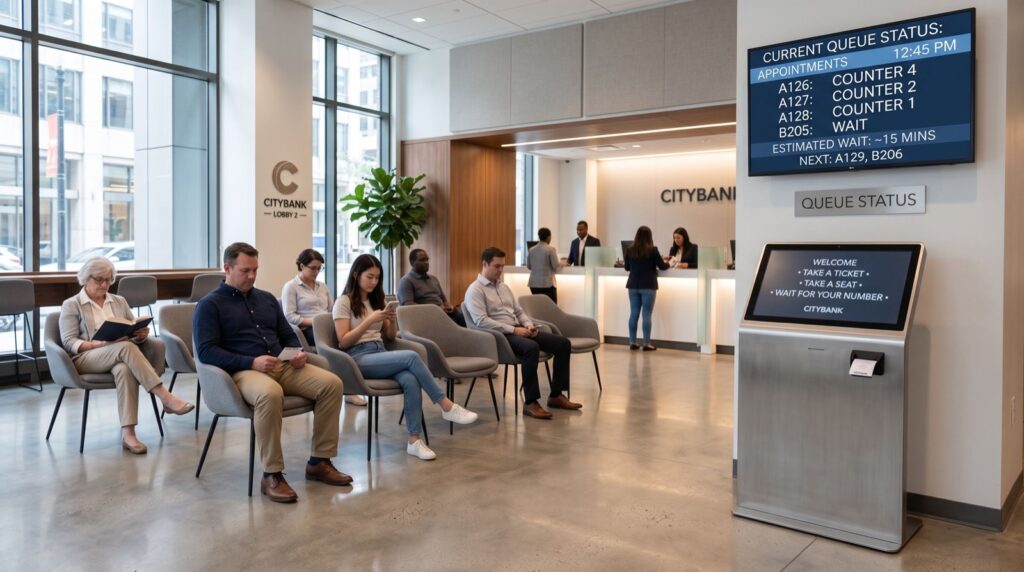
Even with these differences, the underlying components are shared: ticketing, routing, displays, counter terminals, and analytics. A platform that supports multiple languages and offline resilience out of the box will serve both markets from a single specification.
Choosing One Platform For Both Markets
Operators who want consistency should evaluate vendors against criteria that hold true across borders. Working with reliable local experts who understand both regions makes the selection far smoother.
- Multilingual by design: Arabic, English, and Urdu without custom development.
- Offline continuity: keeps sequencing during power or network dips.
- Central reporting: one dashboard that rolls up every branch and country.
- Flexible routing: local service categories per branch, shared logic underneath.
- Local support: on-the-ground installation and spare parts in each market.
A queue management system in saudi arabia that also ships to Lahore under the same brand simplifies procurement, warranty, and staff transfers between offices.
Deployment Tips That Apply Everywhere
Regardless of location, the same disciplined rollout produces the best results. These steps have proven themselves across dozens of branches.
- Map the current visitor journey before touching hardware.
- Define clear service categories that match how staff actually work.
- Pilot in one branch per country, then scale on evidence.
- Train agents on routing logic, not just the call button.
- Review analytics weekly for the first month, then monthly.
A field-tested tip: in Lahore, always confirm that displays and kiosks are on the same backup circuit. Nothing frustrates visitors more than a screen that dies mid-queue while the counter power stays on.
Another lesson from cross-border projects is to standardise your naming before rollout. When one branch calls a service “Account Opening” and another calls the same thing “New Customer”, your group reports become impossible to compare. Agree on a shared list of service categories at head office, then let each country translate the labels into the local language. The underlying category stays identical, so the analytics line up cleanly across Riyadh, Jeddah, and Lahore.
Handling Peak Hours in Each Market
Peak patterns differ between the two regions, and planning for them separately prevents avoidable queues. In Saudi Arabia, service centres often spike after midday prayers and in the early evening, so mobile check-in and appointment throttling help spread demand. In Lahore, mornings and the hours before closing tend to concentrate walk-in traffic, which makes fast kiosk check-in and clear signage the bigger priority.
- Forecast from real data rather than assuming both markets behave the same.
- Enable appointment throttling where mobile adoption is high.
- Add temporary counters during predictable seasonal surges.
- Redirect quick tasks to a dedicated express lane at busy branches.
Treating each market’s rhythm on its own terms, while keeping the platform and reporting shared, is the balance that delivers a consistent brand experience without ignoring local reality.
Measuring Success in Both Regions
Use the same core metrics everywhere so you can compare branches fairly across markets.
- Average wait time per service category.
- Service time per agent and per branch.
- Abandonment rate before service.
- Peak-load pattern by day and hour.
- Satisfaction score captured at exit.
According to guidance from the GSMA, digital-first service journeys continue to raise customer expectations across emerging markets, which means the branch that measures and improves consistently will keep an edge in both the Gulf and Pakistan.
Frequently Asked Questions
Can one queue system serve both Saudi Arabia and Lahore branches?
Yes. A platform with built-in multilingual support and central reporting can run identically in both markets. You configure local service categories and languages per branch while keeping one shared dashboard for group-level insight.
Is power backup really necessary in Lahore?
For most locations, yes. Occasional outages are common, and a system that loses its ticket sequence during a cut damages trust quickly. Choose hardware with battery backup and offline continuity.
Which market needs mobile check-in more?
Saudi Arabia currently shows stronger demand for mobile QR check-in, but Lahore is catching up fast. Specifying mobile-ready hardware now avoids a costly upgrade later.
How do I keep reporting consistent across countries?
Standardise your service categories and metric definitions before go-live. When every branch measures wait time and abandonment the same way, cross-border comparison becomes meaningful.
Conclusion
The right queue management system in Saudi Arabia and a well-specified deployment in Lahore share the same DNA but demand attention to local language, power, and regulatory realities. Operators who standardise on a flexible, multilingual, resilient platform gain consistent reporting and a smoother experience in both regions during 2026.
Ready to unify your visitor flow across the Gulf and Pakistan? Speak with an experienced provider about a single solution that adapts to each market, and start with a pilot branch in each country to prove the results.